
RIVERSIDE
DESIGN.
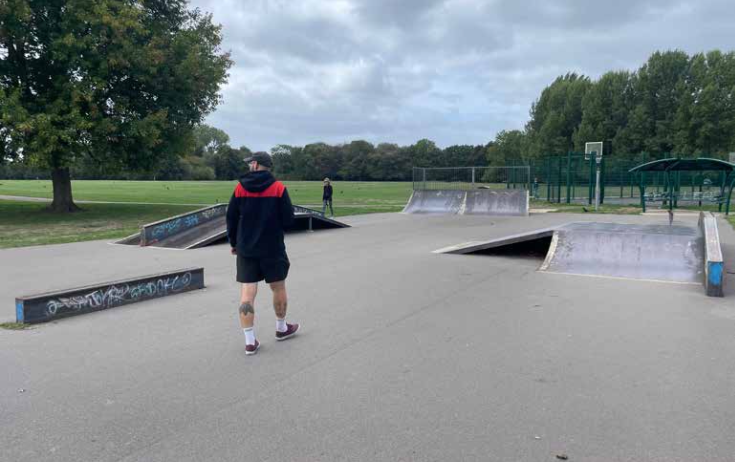
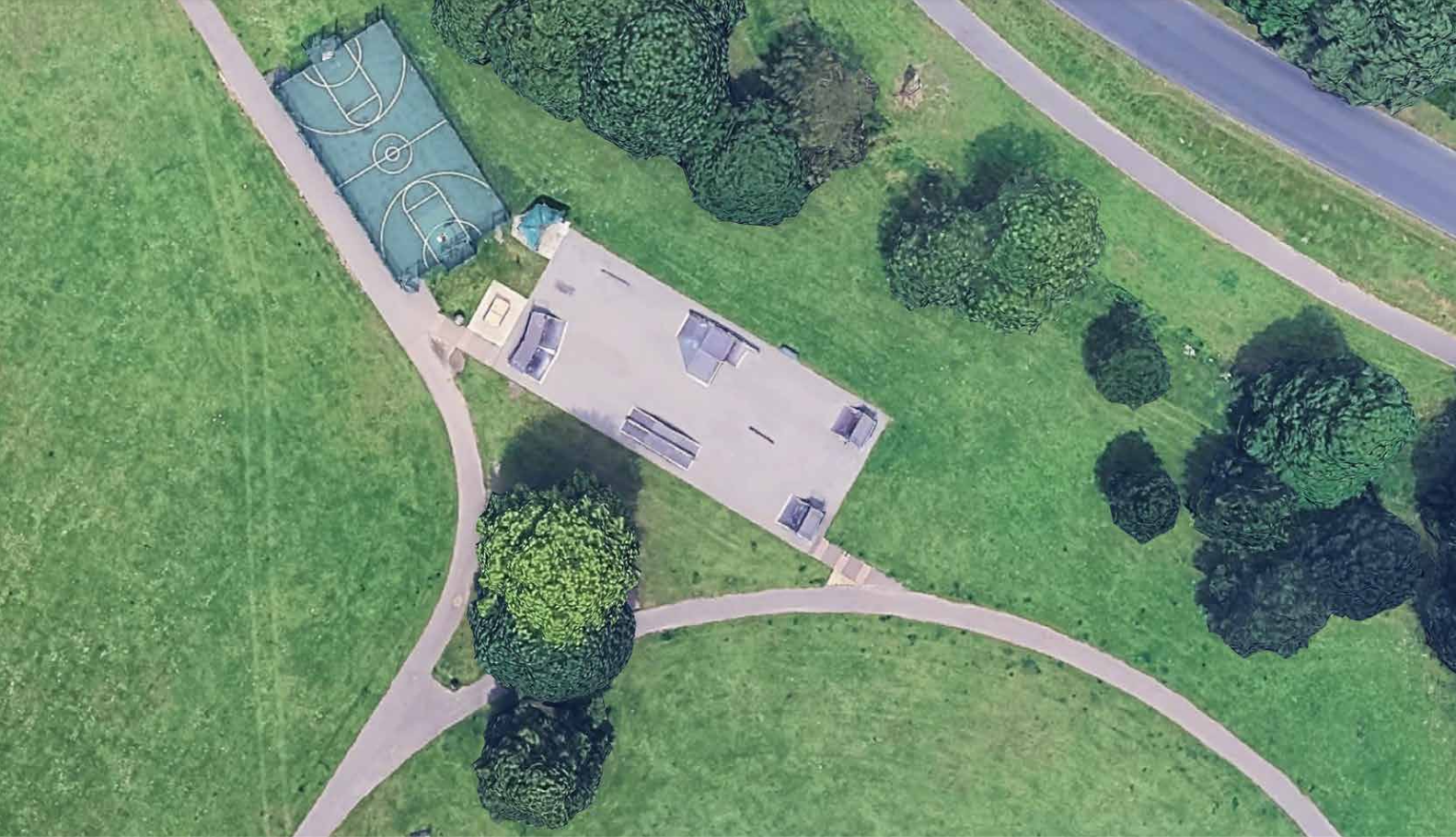
We’re inviting you to help shape the new Riverside Skate Landscape.
Developed around the theme “Where the River Meets the City”, the design will celebrate the history and character of the River Itchen while creating a distinctive, inclusive and exciting place to skate, meet and spend time. Share your written or illustrated ideas using the form below, or download our scale site plan and sketch, scribble or draw directly onto it.
You can also join our in-person workshop on Saturday 21 November, from 10am–12pm, with venue details to be announced soon.
to get you thinking…
What would make you want to visit and spend time here?
What features, shapes or obstacles would you like to ride?
How could the design work for beginners and experienced riders?
What would help the space feel welcoming and inclusive?
Where should people be able to sit, meet, watch and rest?
How could the design reflect the River Itchen and Southampton?
What colours, materials or textures would suit the space?
How should the skate landscape connect with the surrounding park?
Is there anything that would make you feel more confident using it?
What is the one thing the new design must include?

SHARE YOUR IDEAS
Send us an email with all your ideas.
A decade in the city:
Skate Southampton
By Steve Béga
Skateboarding is such a weird and wonderful thing. It's also incredibly misunderstood, which means it has always faced something of an uphill battle when it comes to public perception, support and investment. Trying to convince people of its value is one challenge; trying to get places built that satisfy the needs of everyone who might set foot or roll around on them is another entirely.
Skateboarding has brought an enormous amount to my life, and although I recognise that it isn't for everyone, I've always felt that everybody could benefit from understanding it a little better. That belief gradually developed into something of a personal mission: to make people in Southampton respond positively to skateboarding, whether they participated in it or not. Not simply to convince people that skateboarders deserve better facilities, but to demonstrate the creativity, culture, community and alternative ways of seeing the world that come with it.
One of the things I've always found fascinating about skateboarding is how it changes the way you interpret your surroundings. A set of steps, a bench, an unusual piece of architecture or a patch of smooth paving can become something completely different through the eyes of a skateboarder. Where one person sees an obstacle, another sees an opportunity. It's this ability to reinterpret our environment that makes skateboarding so interesting to me, and why my ambitions have never been confined to designated skateparks.
Growing up
I grew up skateboarding in and around Southampton. I'm not quite as old as some of the people still kicking around the scene, but I'm old enough to remember Mayflower Park and to have watched its skatepark gradually fall apart. For years, the facilities were dismantled for the Southampton Boat Show and reassembled afterwards, seemingly getting a little worse each time, until eventually they disappeared altogether. For what felt like an eternity, there was very little to replace them, and like many skateboarders I spent a lot of my younger years frustrated by the lack of decent provision for something I dedicated so much of my time to.
Interestingly, I didn't start out as a skateboarder. I was a rollerblader, and I happened to grow up on a particularly smooth street that attracted skateboarders from the surrounding area. Watching some of the older lads skate opened my eyes to something different, and eventually I hung up the blades and picked up a skateboard. I've been skating ever since, and that experience has stayed with me, particularly now that I'm a parent watching my own children and younger family members discover different wheeled sports and cultures. Sometimes I think skateboarders forget how they first discovered these spaces themselves, and how important it can be to watch people doing things you can't yet imagine attempting.
Before establishing Skate Southampton, I helped campaign for and deliver the redevelopment of Bartley Skatepark in Totton. That involved community organisation, fundraising, consultation and working with the local council, and looking back it feels like a remarkably straightforward process compared with some of the projects I've become involved with since. At the time, I was probably quite naive about how complicated public projects could become, but I carried that enthusiasm into Southampton, where there was an obvious need for better facilities and a wider problem around how skateboarding was perceived and treated.
Guildhall Square was a particularly interesting example. Following its redevelopment in 2010, the square became a natural gathering place for skateboarders, offering smooth paving, interesting architecture and plenty of opportunities to skate. Unfortunately, skateboarding there was contentious, with people receiving fines and the community sometimes pooling money to help pay them. It raised an important question about why skateboarders were being penalised for creatively using what was supposed to be an open public space.
Through conversations with Southampton City Council, a code of conduct was eventually established around mutual respect and shared use. Councillor Satvir Kaur suggested celebrating skateboarding through an event, and shortly after the first Slamma hit the square. Along with others we established Skate Southampton to help make that happen and pursue a wider ambition. We wanted to improve facilities, organise events and demonstrate that skateboarding could make a positive contribution to the city, but we also wanted to challenge the idea that it belonged exclusively inside a skatepark.
an unlikely ally
One of the most significant developments came through our relationship with John Hansard Gallery, which moved into its new home on Above Bar Street in 2018, overlooking Guildhall Square. The previous year, sculptures installed in the square as part of a summer programme had been adopted by local skateboarders. They weren't necessarily designed with skateboarding in mind, but people immediately recognised their potential, which was exactly the kind of interaction with public art and architecture that interested me.
I was already following the work of designers such as Rich Holland, particularly the more sculptural approaches to skateable architecture emerging from Scandinavia and elsewhere in Europe. I sent the gallery examples of Rich's work alongside some of the skate events I'd been involved with, which led to a meeting with gallery director Woodrow Kernohan and Ros Carter. I went into that meeting half expecting another conversation about why skateboarding was a problem, but instead found an organisation genuinely interested in what skateboarders were doing. Rather than objecting to people skating the sculptures, the gallery recognised that this was an interesting and legitimate way of engaging with art and public space.
That openness changed everything, and in 2019 we collaborated on John Hansard Gallery's Community Takeover programme, bringing skateboarding directly into the gallery. We deliberately celebrated the wider culture surrounding skateboarding, including photography, film, music, art, design, zines and education, alongside the physical act of skating. We worked with people including Professor Iain Borden and Long Live Southbank to explore the relationship between skateboarding, architecture and public space, while also organising film-making workshops, exhibitions, skateboard customisation and activities involving young people who might not otherwise have engaged with skateboarding and an institution like JHG.
The intention was to demonstrate that you didn't have to ride a skateboard to participate in skateboarding culture. By celebrating everything surrounding the activity, we could start conversations with people who might otherwise have dismissed it, and those conversations ultimately created opportunities to do something much more ambitious.
Skateboarding has always had an interesting relationship with permission. Historically, part of its appeal has been its anarchic nature, with skateboarders exploring and making use of places without necessarily asking whether they were designed for skating. There's a certain defiance in that, and I wouldn't want to lose it, but as I've got older I've also recognised that if we want skateboarding to become more widely accepted, particularly within shared public spaces, there needs to be dialogue and compromise. That doesn't mean sanitising skateboarding or stripping away its identity, but understanding how different people use public spaces and how those spaces might be designed to accommodate more activities rather than excluding them.
This became an important part of our work with John Hansard Gallery. Projects such as Safe Spaces Soton invited people to reconsider overlooked and underused places across the city, asking not simply what a space was designed for, but what people might actually want to do there. Could a bench become something more than somewhere to sit? Could a sculpture encourage play? Could a public square become a place for creativity, movement and social interaction without needing to be designated for one particular activity?
These questions also connected with Southampton's City of Culture 2025 bid, where skateboarding became part of a wider conversation about the city's cultural identity. The ambition was no longer simply to improve skateparks, but to influence how Southampton thinks about public space.
Hoglands
What makes Hoglands particularly special is the transformation of the space itself. What was once a deteriorating, enclosed and increasingly uninviting skatepark has become an open, flowing landscape that feels like a natural part of Southampton’s Central Parks. It’s a space where skateboarding, architecture and landscape design come together, creating something that can be enjoyed by people of different ages, abilities and interests.
Getting to this point was far from straightforward. Some of the earliest conversations began in 2018, followed by years of consultation, design development and collaboration. Hoglands forms part of Southampton’s Grade II* registered Central Parks, bringing significant heritage and landscape considerations. Although we originally explored a more conventional urban street plaza, it became clear this wouldn’t be supported within the historic park. Working with Rich Holland, we instead developed a flowing, sculptural landscape inspired by places such as Stockwell, designed to complement the park rather than feel like a separate facility.
The design also needed to consider existing trees, drainage, lighting, visibility and public safety, all of which influenced the scale and arrangement of the skate features and we also managed to increase the footprint significantly which is incredibly hard to do in areas with such high levels of protection. By 2021–22, the design was well advanced, but planning, approvals and construction took considerably longer than anticipated. Rising construction costs following Covid placed further pressure on the budget, meaning some original proposals, including additional concrete areas and movable skateable sculptures, couldn’t be delivered as part of the initial construction.
One of the challenges with such a lengthy process is maintaining communication with a changing community. By the time construction began, a new generation of skateboarders had emerged who weren’t necessarily familiar with the earlier consultations or the reasons behind certain design decisions. I understand why some people would have preferred larger transitions (especially as someone who personally prefers to skate that stuff), more challenging street obstacles or a different layout, but I also believe Hoglands offers plenty of challenges for experienced skateboarders willing to push themselves creatively. Some of the most technical and progressive skateboarding happens on the simplest terrain, and the challenge doesn’t always need to be dictated by the size or difficulty of an obstacle. It’s often about how you interpret a space, the lines you discover and what you challenge yourself to do with what’s available. That’s always been a fundamental part of skateboarding that I feel is often forgotten.
Despite the challenges involved in delivering the project, Hoglands is something worth celebrating. Seeing people learning to skate, experienced skateboarders discovering new lines, people on scooters finding their confidence and families enjoying the space together has been incredibly rewarding. The improved visibility, lighting and connection to the surrounding park have transformed a previously neglected area into somewhere more welcoming, safer and enjoyable for everyone.
I’m particularly proud that we created something distinctive rather than simply replacing the old ramps with newer versions or a standardised park. Working with Rich Holland, John Hansard Gallery, Southampton City Council and the wider community, we’ve demonstrated how skateboarding can be thoughtfully integrated into the public realm. No skate space will satisfy everybody, and there are elements we would’ve loved to incorporate had there been fewer restrictions in the brief, particularly the introduction of additional street-inspired skateable sculptures and features over time. But Hoglands represents years of collective effort and a significant improvement to the park, creating a place for people to meet, learn, progress and enjoy themselves.
SPORTS CENTRE
Southampton Sports Centre is another significant project we’ve been involved with for many years. We were originally approached by the Friends of Southampton Sports Centre to help explore the design and development of a new skatepark as a way of kickstarting wider investment in the site. Working with Southampton City Council, we helped develop a proposal to invite Vans to host one of their Park Series events at the Sports Centre, which we hoped could act as a catalyst for further improvements. Unfortunately, the bid was unsuccessful, but our involvement continued as the council developed its wider plans for the Sports Centre. We provided advice and advocated for skateboarding to be included in the long-term vision, particularly as there had initially been no dedicated funding or investment identified for skate facilities. Much of the proposed investment was being driven by organisations such as British Cycling and other established sports bodies with considerably greater resources, so it was important to us that skateboarding wasn’t overlooked simply because it didn’t have the same financial backing.
It’s encouraging to see the new skatepark now built, although we appreciate how frustrating it is for the community to see a completed facility that they aren’t yet allowed to use. There’s still considerable work taking place across the wider Sports Centre, and while we don’t have a confirmed opening date, we’re confident it will become accessible at some point in 2027. As with so many of these projects, the visible construction is only one part of a much longer and more complicated process, and we’re looking forward to finally seeing people enjoying the space.
What makes a good skate space?
One of the things I find interesting about the criticism of spaces is how differently people define a good skatepark. Some want large transitions, others want technical street obstacles, manual pads, ledges or rails, while some want somewhere to learn and others want facilities that challenge experienced skaters. Everyone has their preferences, and they're all valid, but accommodating every individual preference in one space is difficult, particularly when budgets and available land are limited.
I also think there's a danger in assuming that bigger or more difficult obstacles automatically make a better skatepark. Skateboarding is fundamentally creative, and some of the most progressive and technical skateboarding happens on the simplest objects. A small curb can provide almost endless possibilities depending on how someone approaches it, because the challenge isn't always dictated by the terrain; often it comes from the skateboarder. That's the essence of street skateboarding, finding possibilities in things that weren't necessarily designed for you.
One of the things that makes skateparks particularly interesting is that they're among the few public spaces where the people who use them have a genuine opportunity to influence how they're designed. Community contributions can directly shape the character of a place, and that is incredibly rare. Every skatepark has its own identity, influenced by the people who helped create it, the landscape it occupies and the different ways people choose to use it, most public spaces offer limited consultation and rarely are those contributions actually brought to life.
Understandably, certain obstacles and features have become familiar, almost standardised elements of skatepark design. They're recognisable, functional and fun to skate, and there's absolutely a place for them. But we shouldn't allow that familiarity to limit our imagination or lead to the same spaces being replicated everywhere. Skateboarding has always been about interpreting your surroundings differently, finding unexpected possibilities and approaching familiar objects in new ways. Surely the spaces we create for it should encourage that same creativity and experimentation, rather than becoming increasingly predictable.
I've also become increasingly interested in how the growth of competitive skateboarding, particularly through the Olympics, is influencing skatepark design. There's a risk of creating a standardised formula of obstacles designed around particular competitive disciplines, which certainly has its place but shouldn't become the only model. Skateboarding thrives on exploration, interpretation and individuality, and for me the most interesting skate spaces are those that feel organic, encourage different approaches and remain engaging over time, just like the streets. A good space shouldn't tell you exactly how it must be used, but leave room for imagination.
Another recurring argument is whether beginners, scooter riders and experienced skateboarders should be separated. There are legitimate design considerations around different speeds, abilities, lines and the safe use of space, but I also think we need to remember how people discover skateboarding. I learned by watching older skateboarders on my street, while others discover it through scooters, rollerblades or simply spending time around people who skate. Some of the most valuable experiences happen when different ages and abilities share a space, where younger riders see what is possible and more experienced riders become role models, sometimes without even realising it.
Of course, that only works when people communicate and respect one another. It's easy to complain about scooter riders, children or parents who don't understand how a skatepark works, but education and conversation are far more productive than hostility. As a community, we need to be willing to explain how spaces work, how to recognise someone's line and how to look out for each other.
The same principle applies to our relationship with councils, planners and other decision-makers. There is often a frustrating cycle where councils struggle to communicate complicated processes, while communities understandably lose patience or interest when nothing seems to happen. That can quickly become an unproductive 'us versus them' situation, and I've learned that meaningful change requires patience, persistence and a willingness to understand the less exciting parts of delivering projects. You don't have to agree with every decision, but constructive engagement gives us a much better chance of influencing the outcome.
Guildhall Square
While Hoglands was slowly progressing, we continued exploring different approaches to skateable public space through our relationship with John Hansard Gallery, Southampton City Council and other partners.
Reshaping the Square, supported by Skateboard GB and John Hansard Gallery, brought a series of the worlds first 3D-printed concrete interactive sculptures in the public realm. These temporary interventions allowed us to experiment with how objects could be introduced into existing urban environments, encouraging skateboarders and the wider public to reinterpret and interact with familiar spaces in different ways.
This was an important step towards exploring how skateboarding could influence public art and urban design beyond dedicated skate facilities. Rather than creating another skatepark, we were introducing objects that could be moved, repositioned and experienced in different locations, allowing the city itself to become part of the experiment. The sculptures challenged conventional ideas about what public art should look like and how it should be used, while demonstrating the potential for skateable architecture to encourage creativity, play and social interaction.
This thinking developed further through Scribble, which grew out of several years of conversations, workshops and experiments exploring the creative principles of skateboarding. The sculptures became a central part of a wider programme of activity in Guildhall Square over the summer of 2026 which, were funded entirely by John Hansard Gallery off the back of me sharing a proposal for a crazy idea.
The Scribbles provided opportunities for people to interact with art and each other in ways that weren't necessarily prescribed or even anticipated. Rather than existing as isolated artworks or being limited to skateboarding events, they were incorporated into other cultural activities, including Southampton Pride, the Black Business, Music and Arts Festival (BBAM) and the i-Place Conference, where they took on different roles as seating, staging, skateable objects and opportunities for spontaneous play.
For me, this was one of the most exciting outcomes of the project. The sculptures weren't simply being presented to an audience; they were becoming part of the activities already happening in the city, taking on different functions depending on who was using them. Someone might see an obstacle to skate, somewhere to sit, a stage for a performance or something for their children to explore. That flexibility is fundamental to what we're trying to achieve, demonstrating how public art can encourage people to interact with their surroundings rather than simply observe them.
The project also created opportunities to explore the relationship between art, creativity and education. As part of the British Science Festival, we worked with John Hansard Gallery and the University of Southampton's Mathematics department to develop workshops exploring the connections between sculpture, mathematics and creative thinking. These activities demonstrated how the principles behind Scribble could be applied beyond skateboarding, encouraging people to experiment, problem-solve and explore ideas through play.
Alongside this, we extended the participatory ideas behind Scribble into Totton Creative Hub through ScribbleFest in May 2026, where hundreds of people took part in collaborative drawing, mark-making and creative activities. Although this was a different format from the sculptural interventions in Guildhall Square, it explored the same principles of experimentation, imagination and play, giving people permission to create without needing a predetermined outcome.
In many ways, Scribble brings together much of what we've been working towards since establishing Skate Southampton. We're not simply trying to persuade people to accept skateboarding, but exploring how its underlying creativity can contribute to the wider cultural life of the city. By integrating sculptures into existing events and allowing different communities to discover their own uses for them, we're beginning to demonstrate how public spaces can become more inclusive, adaptable and interesting without needing to prescribe exactly how people should behave within them.
Riverside
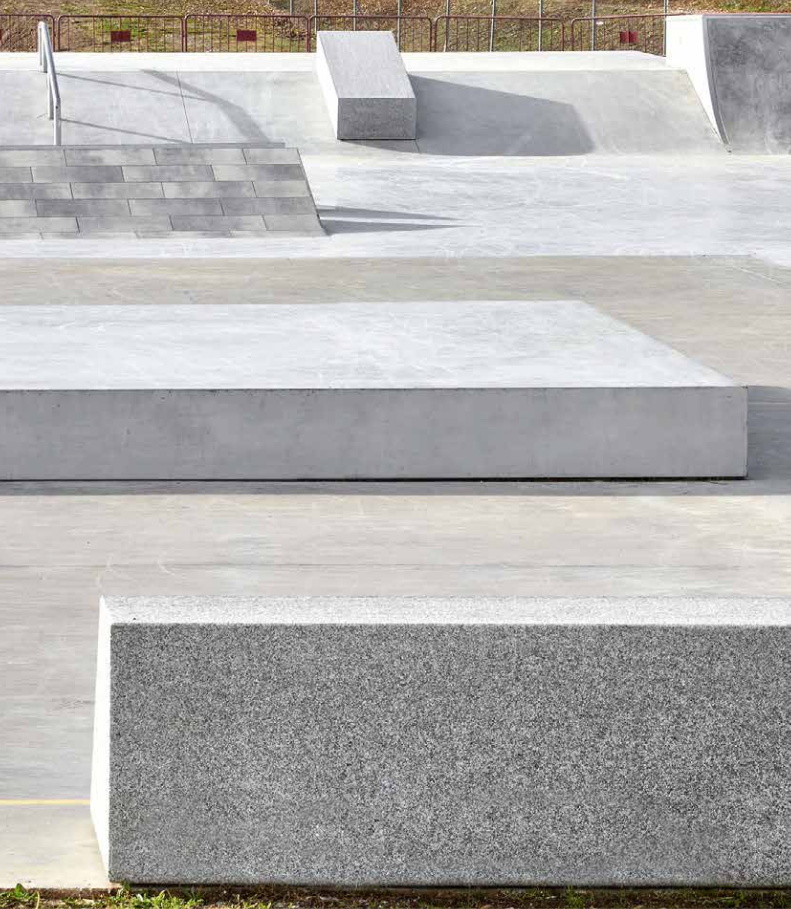
With Hoglands now open, attention has turned to other opportunities across Southampton, and Riverside is particularly exciting because it offers a different set of possibilities. Unlike Hoglands, we have greater freedom to explore more conventional skate terrain, including larger features, more challenging obstacles and a broader mix of street and transition skating. That doesn't mean abandoning the creative and sculptural approaches we've been developing, but applying what we've learned in a different context.
Consultation is an essential part of that process, and we want people to share examples of spaces they enjoy, explain what works and what doesn't, contribute sketches and challenge our thinking. But it's also important that people understand what consultation can and cannot achieve. A design has to respond to its site, available budget, planning requirements and the needs of different users, and not every suggestion will make it into the final design. That doesn't mean it hasn't been heard.
One of the biggest lessons from Hoglands is the importance of maintaining communication throughout a lengthy project, particularly when circumstances change. We also need to recognise that community involvement shouldn't end when a consultation closes. Skateboarders can help organise events, raise funds, contribute ideas, develop projects and build relationships that create opportunities beyond any individual skatepark.
There are also other projects progressing across Southampton, including Shirley Ponds, where the council has pursued a separate design process despite our offer to contribute. I'd like to see a more joined-up approach to these opportunities in future, one that makes better use of the knowledge and enthusiasm already present within the local skate community.
skate-friendly city
When I started Skate Southampton, my ambition was never simply to get one skatepark rebuilt. I wanted Southampton to become a city where skateboarding was understood, celebrated and welcomed, with good dedicated facilities alongside interesting places to skate throughout the city. I wanted skateboarders to be able to use public spaces without automatically being treated as a nuisance, and to create opportunities for people to experience skateboarding culture even if they never stand on a board.
That means recognising that skateboarding can contribute to art, architecture, education, health, wellbeing and the social life of our communities, while also accepting that progress is rarely straightforward. I've spent years learning just how complicated it can be to turn a relatively simple idea into something physical, and there have been frustrations, compromises, missed opportunities and plenty of moments when things have moved far more slowly than I would have liked.
But there have also been extraordinary collaborations and opportunities that I couldn't have imagined when we started. None of the work with John Hansard Gallery would have happened without people being willing to listen, take risks and recognise the value of something they didn't necessarily understand at first. That's what makes these relationships so important, and why I think there's enormous value in continuing to build connections between skateboarders, cultural organisations, designers, councils and communities.
Skateboarding has always challenged conventional ideas about how public space should be used, and I don't think we should lose that spirit. But if we want to influence how our cities develop, we also need to be prepared to participate in the conversations, consultations and decisions that shape them constructively. We need people to get involved, make suggestions, draw sketches, organise events, raise money, question decisions and keep pushing things forward.
It's easy to be frustrated by what doesn't exist, but it's much harder to help make something happen. Ultimately, I want Southampton to be a place where skateboarding isn't confined to a handful of designated spaces, but is recognised as a valuable and creative part of the city itself. Not every space needs to be a skatepark, but perhaps more of our public spaces could be a little more skateable, playful and open to possibility.
And if we can help people see their city differently along the way, I think that's something worth continuing to push for.
Go skate…